Breaking Britain returns, this time it’s the schools
Why is so much of Britain’s infrastructure literally falling apart?
13 Sep 2023
Why is so much of Britain’s infrastructure literally falling apart?

Lib Dems condemn “chaotic and incompetent” budget
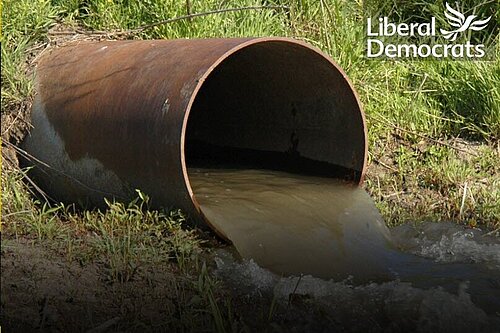
The sheer quantity of raw sewage being dumped into Britain’s rivers and coastal areas is a scandal and a disgrace.

One of the most shocking events of the 2015 General Election night was the loss of our top held and target seats with women and BAME candidates, which resulted in an entirely pale and male parliamentary party. Members were rightly upset by this, and there has been much discussion about what steps the party needs to take to ensure that in 2020 and beyond our party looks like the countries and communities we represent. Top seats are already beginning the process of selecting Westminster candidates for 2020. We can't afford to delay any arrangement, hence the motion coming to York Conference. Under our current constitution, these arrangements are the responsibility of the three state parties. We hope members will let their state party officers know their views as well as responding to the Federal consultation and debate in York.
South Lakeland MP Tim Farron has welcomed the news that Victoria Bridge in Kendal has now reopened, and has called for other bridges to be reopened as soon as possible.
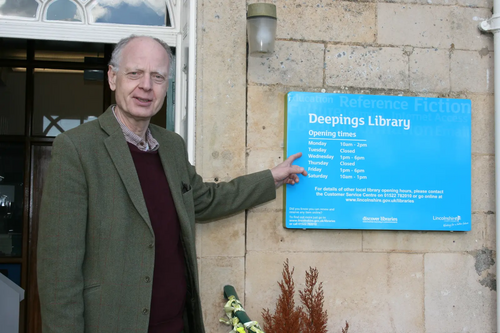
Deepings residents have been fighting for three years to ensure that the Library reopens in its original building, and were rewarded with success on 30 January. Lincolnshire County Council closed the Library, with the approval of Market Deeping County Councillor, Peter Robinson (Conservative), despite the fact that it served a growing community and was busier than some Libraries the County Council planned to keep open.
Studying the trillions of bacteria and other microbes that share our body space could lead to a preventative treatment for immune diseases such as rheumatoid arthritis. It's long been suggested that the bacteria which live in our gut, mouth and elsewhere on our bodies may affect our immune system and lead to the development of certain diseases, including rheumatoid arthritis. But exactly how changes to these bacteria, collectively called the "microbiome", cause disease remains to be discovered. The research, which we awarded £2 million to, aims to unlock the link between gut bacteria and the development of immune diseases. This programme award brings together an international team of researchers, led by the University of Oxford, with partners from Birmingham and University College London, as well as collaborators in the US at Harvard University, New York University and Mount Sinai Hospital, New York. It should shed light on the role of the gut microbiome in early arthritis, established rheumatoid arthritis, a
Well, who would have thought it! As far as I can make out, I'm magic!
A new UK study has demonstrated that lesions found in the bone marrow could be used to predict the progression of joint diseases. The University of Southampton's Medical Research Council (MRC) Lifecourse Epidemiology Unit has determined that these lesions, which can be seen clearly on MRI scans, could be monitored to help identify individuals who are more likely to suffer from more rapidly progressing osteoarthritis. This conclusion was based on data from the SEKOIA study, a major international osteoarthritis disease-modifying trial, which involved the use of MRI scans on the knees of 176 men and women over the age of 50, who were then followed up for an average of three years with repeated knee X-rays. Results published in the Journal of Rheumatology showed that individuals with bone marrow lesions on their MRI scan generally experienced more rapid osteoarthritis progression than those that did not. On average, the space within the joint is lost at a rate of 0.15 mm per year, yet individuals with signs of le